From 15 September 2026, British passport holders can no longer enter Thailand visa-free for 60 days. The Thai government has confirmed a cut to 30 days for tourism-only visits, following a cabinet decision on 14 July 2026 and publication in the Royal Gazette on 31 August 2026. Anyone planning to stay longer, or travelling for business, now needs to plan around the new rule.
What's changing for UK travellers?
| Until 14 September 2026 | From 15 September 2026 | |
|---|---|---|
| Length of stay | 60 days, visa-free | 30 days, visa-free |
| Purpose covered | Tourism, business engagements or specified urgent/ad-hoc work | Tourism only |
The previous 60-day exemption, in force since July 2024, covered "tourism, business engagements or specified urgent/ad-hoc work" purposes. The new rule — published in a separate notice in the same Royal Gazette issue — restricts visa-free entry to tourism only. The UK remains on Thailand's new 30-day visa-exemption list.
If you're travelling for a business meeting, conference or work-related activity on or after 15 September 2026, the new tourism-only visa exemption may not cover your trip. You'll need to use the visa category that matches the purpose of your visit.
When does Thailand's new 30-day visa-free rule start?
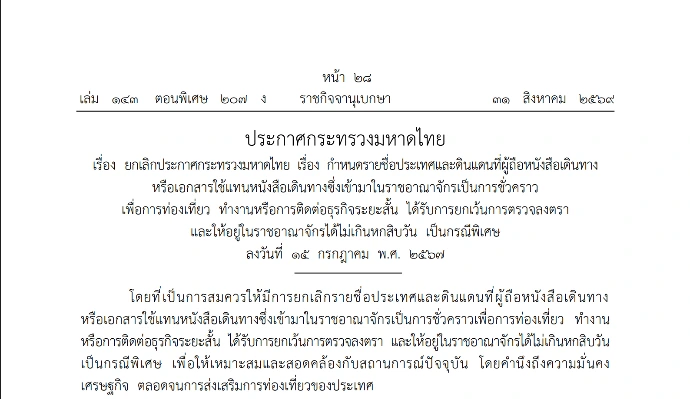
The Ministry of Interior notice was signed by Prime Minister and Interior Minister Anutin Charnvirakul on 26 August 2026 and published in the Royal Gazette on 31 August 2026 (Vol. 143, Special Section 207 Ngor). Under its own terms, it takes effect 15 days after publication — 15 September 2026. Anyone who enters Thailand before that date, even for a stay that runs past it, is still covered by the current 60-day rule for the whole of that stay.
What if I've already booked a trip for Thailand?
- Arriving and leaving before 15 September 2026: No change. The 60-day exemption applies as normal.
- Arriving before 15 September 2026, but your trip runs past that date: Still fine. The rule that applied on your day of entry governs your whole stay — you don't lose days partway through.
- Arriving on or after 15 September 2026: The 30-day limit applies from your first day, regardless of when you booked.
Staying longer than 30 days in Thailand: what are your options?
Tourism stays over 30 days
You have two realistic routes if you know before you fly that 30 days won't be enough:
- Apply for a Tourist Visa (TR) in advance. A single-entry TR is valid for three months from the date of issue (the window in which you must enter Thailand), and allows a stay of up to 60 days from the date of entry, which can be extended by a further 30 days at the relevant Immigration Bureau office, giving up to 90 days in total. It's applied for online through Thailand's e-Visa portal before departure.
- Enter visa-free and extend once you're there. You can apply to extend your 30-day visa-free stay by up to 30 additional days at the relevant Immigration Bureau office, for a fee currently set at 1,900 Baht. This works well if you're not sure of your exact plans before you leave, but it isn't guaranteed — approval remains at the discretion of Thai immigration authorities.
If you already know your trip will run past 30 days, a TR gives you more certainty over the permitted length of stay before departure, rather than relying on an extension application after arrival.
Business trips
Short-term business visits are no longer covered by the tourism-only visa exemption after 15 September 2026. The correct visa depends on the purpose of the trip. Standard business visits, such as meetings with a Thai company, will generally fall under the Non-Immigrant B category listed by the Royal Thai Embassy in London; other activities can fall under different visa categories depending on the exact purpose of the trip, so it's worth checking against your specific itinerary before applying.
1A Visa handles the entire process for you
from preparing your documents to submitting the application
so your Tourist Visa is sorted before you even set off.
Thailand TDAC and other entry requirements
British travellers entering Thailand must still complete the Thailand Digital Arrival Card (TDAC), regardless of whether they enter visa-free or with a visa. It can be submitted within the three days before arrival, including the day of arrival. This requirement is unaffected by the 30-day rule change.
From 15 September 2026, UK passport holders may use Thailand’s visa-exemption scheme no more than twice per calendar year, regardless of whether they arrive by air, land or sea. If you expect to enter more often, arrange the appropriate visa before travelling.
Frequently asked questions
Do British citizens need a visa for Thailand from 15 September 2026?
Not for tourism stays of 30 days or less — the UK remains on Thailand's visa-exemption list. If you plan to stay longer than 30 days, you can either obtain a Tourist Visa before travel or apply for an extension after entering visa-free. If you're travelling for business or work rather than tourism, you'll need a visa in advance.
How long can UK passport holders stay in Thailand visa-free?
Until 14 September 2026: 60 days. From 15 September 2026: 30 days, for tourism purposes only.
My trip is 35 days — what should I do?
Either apply for a Tourist Visa (TR) before you travel — valid for three months from issue, allowing a stay of up to 60 days from entry, extendable by a further 30 — or enter visa-free and apply to extend your stay by up to 30 days at the relevant Immigration Bureau office once in Thailand (current fee: 1,900 Baht). If you already know you need the extra days, a TR gives you more certainty over your permitted length of stay before you even depart.
I've already booked a flight for late September 2026 — does this affect me?
Yes, if you land on or after 15 September 2026, the 30-day limit applies to your entire stay, however long you booked it for. If you land before that date, the 60-day rule still covers your whole trip even if it ends after 15 September.
Can I still get a Tourist Visa (TR) in advance?
Yes. The TR is unaffected by this change. It's valid for three months from the date of issue, allows a stay of up to 60 days from entry, and can be extended by a further 30 days — up to 90 days in total — applied for online before departure.
Does the 30-day rule affect entry by land border?
The 30-day duration applies regardless of how you enter. From 15 September 2026, UK passport holders may make no more than two visa-exempt entries per calendar year, whether arriving by air, land or sea.
Author: Mai, our Visa Consultant at 1A Visa, who works with European clients applying for Thai visas and is familiar with the differing requirements across Thai consulates in the UK and Europe.
Sources:
- Royal Gazette (ราชกิจจานุเบกษา), Vol. 143, Special Section 207 Ngor, 31 August 2026 — Ministry of Interior notice establishing the new visa-exemption country list and 30-day duration
- Royal Gazette, Vol. 143, Special Section 207 Ngor, 31 August 2026 — Ministry of Interior notice repealing the 15 July 2024 (B.E. 2567) 60-day special rule
- Royal Thai Embassy, London — Tourist Visa page (TR validity and stay duration)
- Royal Thai Embassy, London — Non-Immigrant visas page (Non-Immigrant B business-visa requirements)
- Tourism Authority of Thailand — TDAC guidance (3-day submission window)
- Immigration Bureau official fee schedule (Bangkok Immigration Division 1) — extension-of-stay fee
- GOV.UK Foreign travel advice: Thailand — entry requirements (current guidance reflects the pre-15-September rule at time of writing; not yet updated to the new 30-day rule as of 1 September 2026)
*This blog article reflects the Royal Gazette notice published 31 August 2026. Immigration rules can change; always confirm current requirements before you travel.